SEM Image Optimisation
At a neutral point of charge
Each of these currents is a function of the accelerating voltage, as shown schematically below. There exist two equilibrium (one stable and one unstable) points of nul charging:
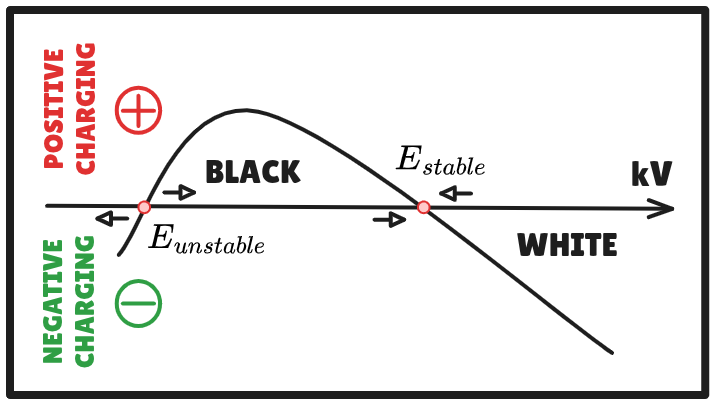
The sign of the surface charge influences electron deviation, but also the amount of scattered electrons reaching the detector. Thus, the foillowing protocol is has been proposed by Dr. Ron Rasch:
- Zoom to high magnification into a small rectangular zone and wait for maximal charging (counting to 10 in ones head)
- Zoom out and check the colour of the previously zoomed area
- If it is darker, increase kV, and if it is lighter decrease it.
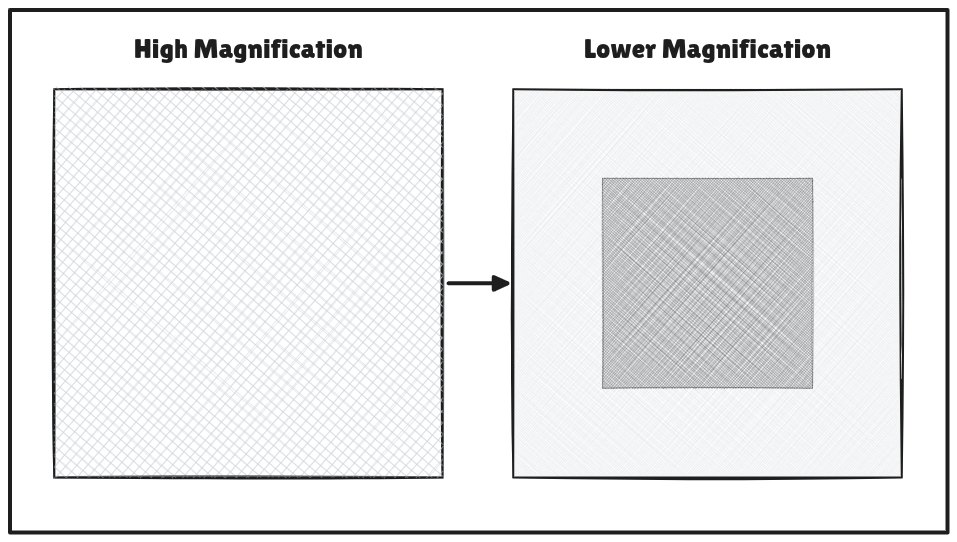
For polymer species, this