Home | Projects | Classes Préparatoires (CPGE) | CV
Lithium batteries - Overview
There are two main types of lithium batteries : lithium-metal and lithium-ions, which both have different use cases and advantages.
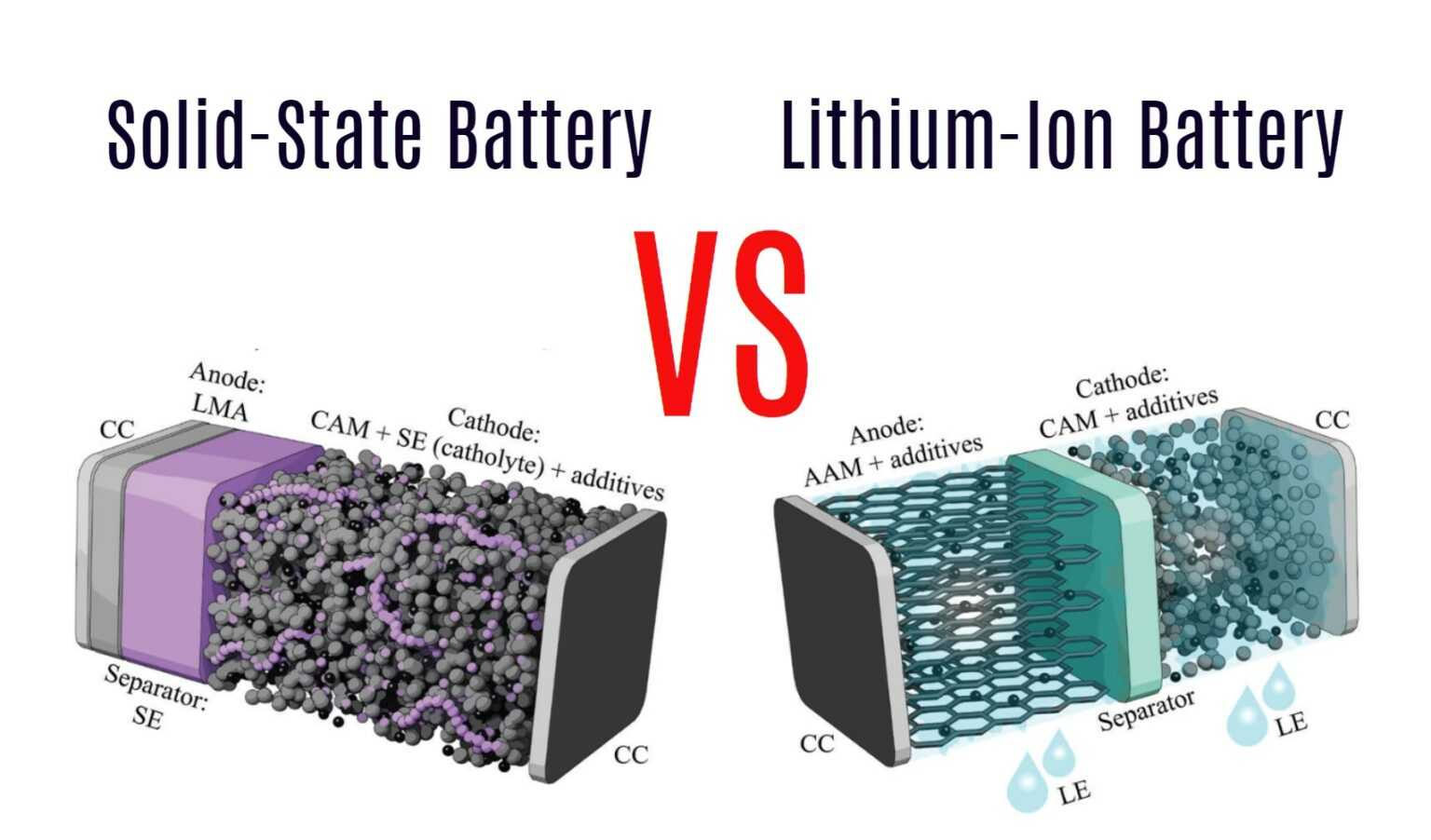
Fig. : LMBs versus LIBs
Lithium metal batteries (LMBs)
Advantages of using lithium metal
- Lithium metal posses an ultrahigh theoretical specific capacity (3860 mAh g−1)
- It also has extremely low electrochemical redox potential (−3.040 V VS ESH)
- Pure lithium metal has the highest anode performance beyond graphite (Gr) intercalation chemistry based materials
Disadvantages of LMBS
- There is signifiant morphology change upon plating and stripping
- Therefore LMBs are often single use, so less ecofriendly
- Their applications include pacemakers, and other integrated devices
- Almost no electrolyte can remain thermodynamically stable against metallic Li due to its low redox pot, so fresh lithium spontaneously reacts with many electrolytes upon contact
- This leads to LMBs having inferior cycle life and safety properties to compared to LIBs
Lithium-ion batteries (LIBs)
Advantages of lithium-ion technology
- LIBs employ intercalation-type anodes, typically graphite, which offer excellent structural reversibility with minimal volume change during cycling
- They provide a high operating voltage window, enabling competitive volumetric and gravimetric (per weight) energy densities at the cell level
- The chemistry is significantly more stable than lithium metal, allowing LIBs to achieve long cycle lifetimes, often exceeding several thousand cycles under optimised conditions
- A wide variety of cathode materials - such as NMC, NCA, LFP and LCO - allows tuning of energy density, power capability, safety and cost, making LIBs highly versatile for consumer electronics, electric vehicles and grid storage
- The presence of a stable solid electrolyte interphase (SEI) on graphite enables reliable cycling without continuous electrolyte decomposition
Disadvantages
- The theoretical specific capacity of graphite (≈372 mAh g⁻¹) is an order of magnitude lower than that of lithium metal, limiting theoretical energy density improvements
- LIBs rely on flammable organic carbonate electrolytes, which introduce safety risks under thermal runaway or mechanical stress
- Intercalation kinetics can constrain fast-charging performance and may lead to lithium plating at high current densities or low temperatures
- The manufacturing process is relatively complex, requiring binders, conductive additives and precise formation procedures to achieve stable SEI formation
- Ageing mechanisms including SEI thickening, loss of active lithium and cathode degradation, and gradually reduce capacity and increase internal resistance over time
(1) Image extracted from Red-Away tech, How Do Solid-State Batteries Compare to Lithium-Ion Batteries?